Commentary published at IEEE
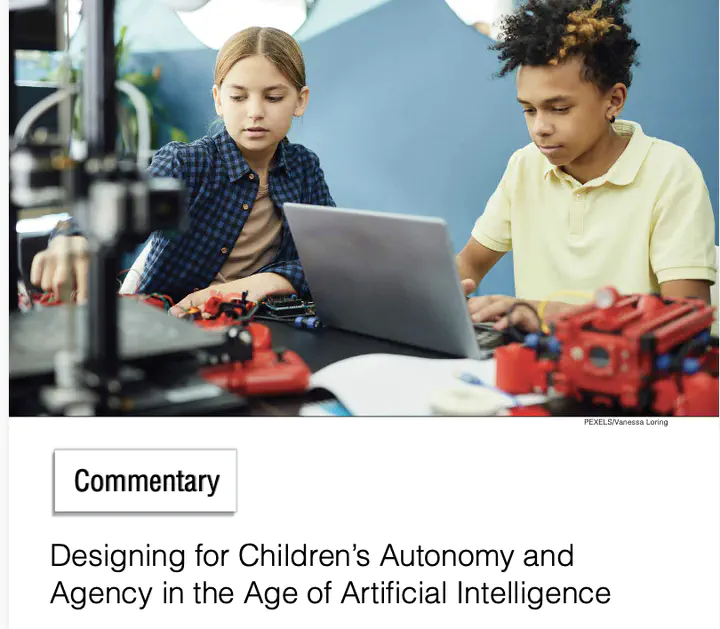
We are pleased to share our latest publication exploring an increasingly important question: How can we ensure that AI systems are designed to genuinely serve children’s best interests?
As AI becomes embedded in educational technologies, digital platforms, and everyday online experiences, policymakers worldwide are introducing new regulations to protect children from potential harms. Initiatives such as the EU AI Act and the UK Online Safety Act signal a growing commitment to safeguarding young users. However, our work identifies a critical challenge: while policies articulate broad goals and principles, they often lack practical guidance for the designers and developers responsible for building AI systems.
Our publication argues that the Human-Computer Interaction (HCI) community has a vital role to play in addressing this gap. For decades, HCI researchers have worked directly with children, developing child-centered approaches that recognise children’s unique developmental needs, rights, capabilities, and vulnerabilities. Yet these insights are rarely reflected in contemporary AI governance discussions.
The key contributions of this paper aims to achieve the following:
- Connecting policy and practice. We highlight the disconnect between high-level policy objectives and the realities of AI design and development, showing why greater alignment is needed between regulators and practitioners.
- Bringing child-centered design into AI governance The paper demonstrates how established HCI approaches can enrich current policy debates by moving beyond harm prevention and toward designing AI systems that actively support children’s wellbeing, agency, learning, and participation.
- Providing a missing perspective on child-centered AI While discussions of AI regulation often focus on risk management and compliance, we emphasize the value of engaging directly with children’s lived experiences and involving them in the design process.
- Advancing interdisciplinary dialogue The work calls for stronger collaboration between policymakers, regulators, AI developers, designers, and HCI researchers to translate children’s rights and policy principles into actionable design practices.
Why This Matters
As AI technologies increasingly shape children’s digital environments, ensuring their safety is only part of the challenge. Equally important is creating AI systems that respect children’s rights, support their development, and empower them to thrive. By bringing together insights from child-centered design and emerging AI policy, this publication contributes to a growing conversation about what responsible and child-focused AI should look like in practice. We hope this work encourages deeper engagement between the HCI and policy communities and helps advance a future where AI is designed not only for children, but also with children’s needs and perspectives at its core.
The full paper can be access here.

OxfordCCAI
Organisation
Oxford Child-Centred AI (Oxford CCAI) Design Lab assembles a series of research activities related to designing better AI for and with children. It is part of Human-Centred Computing at the Department of Computer Science at the University of Oxford.